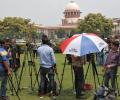
The Supreme Court Monday said the Centre was testing its "patience" and "emasculating" tribunals by not appointing officials to the quasi-judicial bodies which are facing severe crunch of presiding officers as well as judicial and technical members and sought action on the matter by September 13.
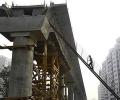
"India's economy is projected to sustain a 7.6 per cent growth rate in both fiscal years 2016-17 and 2017-18," says the year-end update of the flagship report Economic and Social Survey for Asia and the Pacific 2016 of the United Nations Economic and Social Commission for Asia and the Pacific (ESCAP).

Indian economy about to take-off

'Event management can distract from, but not permanently mask, execution failures,' points out Rathin Roy, director, National Institute of Public Finance and Policy.

'We have set out a timetable to reduce income tax rates for all incomes below Rs 50 lakh, and to progressively eliminate the surcharges on income above Rs 50 lakh, by 2024.' The Budget speech past CII president Naushad Forbes wants to hear.
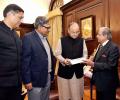
Finance Minister Arun Jaitley should not drop the ball on continuing the battle against black money and move towards digital transactions to reduce the preponderance of cash in the economy, says A K Bhattacharya.

Arvind Subramanian, a senior fellow at the Peterson Institute for International Economics, was informally recommended to the post by Finance Minister Arun Jaitley.

It is time to take a few macroeconomic risks to kick start the growth.
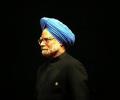
Under constant attack from his political opponents, the public and the media, he is said to have withdrawn into a shell, says Anita Katyal

This Budget signals a shift from a hand-out to a hand-up economy.

The prime minister's August 15 address was undoubtedly inspirational and outlined important economic and social objectives, such as making India a global hub for manufacturing, ensuring bank accounts for all poor families, major thrusts in sanitation and cleanliness, and a radical restructuring of the Planning Commission.
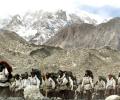
The Election Commission must ensure that soldiers, paramilitary forces and railway employees who work outside their home states are given proper avenues to cast their votes, says Colonel Anil A Athale (retd).
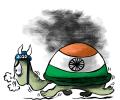
'Slowing down of the economy was mainly due to the demonetisation shock...' 'If you cut off the oxygen supply to a patient in the ICU and the patient dies, the patient does not come alive again when you restore the oxygen supply.'

Sher Shah Suri ruled for only a few years, but his huge influence on India continues six centuries later, reveals Farhat Nasreen.

Disruption is totally unacceptable in Parliamentary system, the President said.
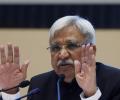
'The EC is a sacred institution.' 'In the last few years, more than once, we have found the EC bending over backwards to accommodate the government.'

''Even without major reforms, with a business as usual scenario, and with current inflation trends, we should be clocking around 11 to 12 per cent nominal growth.' 'That is not happening and is a source of worry,' Rathin Roy tells Arup Roychoudhury.

Without some firmer pledge of debt relief, neither Greece nor the IMF is likely to accept a deal

The Finance Commission has substantially increased the allocation of funds to panchayats, but a large part of it is apportioned by state governments.

The government has provided a long-term vision.

Gujarat has topped with a score of 71.14% on ease of doing business list.

Jaitley's team presents a quintessential mix of foreign-educated, intellectual technocrats and seasoned bureaucrats

As the country readies to go to polls on July 25, one can't deny the role of the military, but there are other factors too.

India's majoritarian regime is now making a dangerously fast-paced move towards theocracy, like its western counterpart did a few decades ago, warns Mohammad Sajjad.

The tall claims that the state administration, particularly Modi's highly charged PR machinery has created to hardsell the state, and in turn Modi himself, are not reinforced by the numbers

Wolfgang Schauble has done right by the Euro zone, but the Greeks believe that doesn't necessarily mean he has done right by them.

A reformed Planning Commission should reflect the diversity of Indian debate.

The Modi government's array of economic policy has been impressive.
'Whoever whispered in his ears that go for demonetisation, misled him completely' and the PM lacked the sagacity to know that it would not work, Yashwant Sinha tells Archis Mohan.

The full transcript of the exclusive interview with Prime Minister Narendra Modi.

The government has taken a number of steps to address the situation faced by farmers.

Here's the full text of President Ram Nath Kovind's customary address to the joining sitting of Parliament on the first day of the budget session.

'Today you have 30 to 40 per cent of bureaucrats who are not parrots of the government, but what happens if you change the system?' 'If implemented, this can disrupt the system, which will have more adverse consequences than demonetisation.'

Modi government has to come up with a robust economic agenda to impress the masses.
'Manmohan Singh was blamed for administrative paralysis, but if you speak to any senior bureaucrat today, they are very bitter and say that files do not move. I am told that more than a thousand files are awaiting clearance.'

Here comes the moment of truth. Modi prides himself on offering an "incorruptible" government. Will he dilute the Prevention of Corruption (Amendment) Bill to coax the administration's fealty and compromise his self-image?
'Being authoritative is one thing -- Nehru was that -- but being authoritarian is quite another -- the current prime minister is clearly one.'

Read the full transcript of President Obama's State of the Union address on Wednesday at the US Capitol in Washington.
